NX
NXplace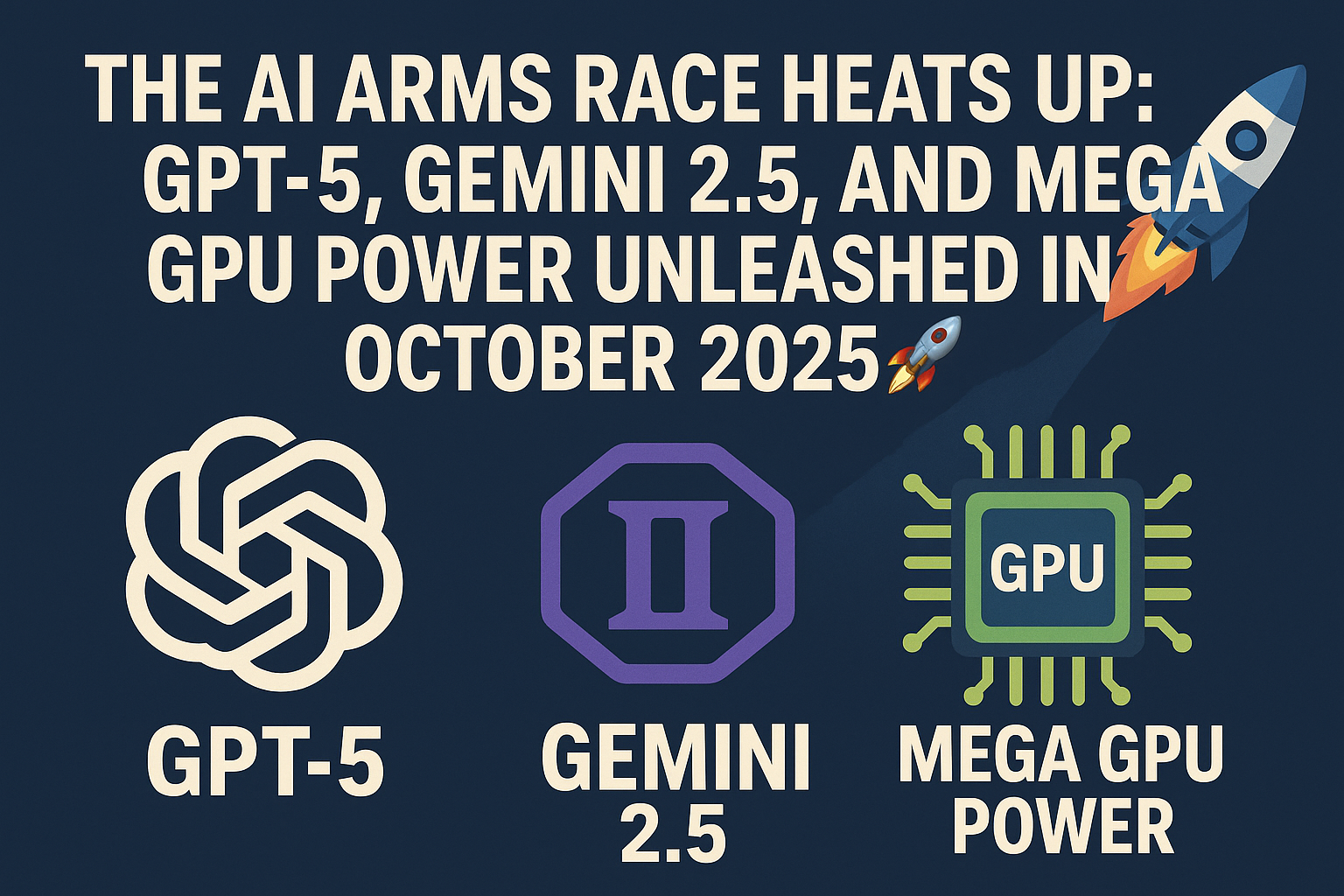
October 2025 is blazing with AI breakthroughs, and the latest from OpenAI, Google, and Anthropic are pushing the boundaries of what AI can do. OpenAI’s GPT-5, released in early August, continues to set the benchmark. This iteration dazzles with extraordinary multi-step problem-solving and code generation skills, making it the all-around powerhouse everyone’s buzzing about(Fello AI, 2025).
Google’s Gemini 2.5 Pro is no slouch either. Available since June, it’s especially suited for deep research and large codebases owing to a mind-blowing 1,000,000-token context window — imagine digesting entire libraries in a single conversation. This makes Gemini an invaluable tool for complex legal analyses and big data syntheses that demand lengthy, uninterrupted context(Fello AI, 2025).
Anthropic edges into the ring with its Claude series, especially the 4.5 Sonnet version released just last month. With an equally massive token window and sharpened focus on coding, agents, and operational tasks, Claude is catching up fast in the intense showdown for AI supremacy(Fello AI, 2025).
Behind every massive AI model lies the crunching power of custom hardware, and this week AMD cemented its role as a top dog in the AI GPU race. OpenAI’s new partnership with AMD launched a whopping 6-gigawatt AI supercluster, promising the massive infrastructure to power not just GPT-5 expansions but future monster models(TST Technology, 2025).
This deal could generate tens of billions in AMD revenue over the next four years. It includes a strategic option for OpenAI to purchase up to 160 million AMD shares at just one cent each, which might grant OpenAI nearly 10% ownership depending on milestone achievements. AMD shares shot up 34%, reflecting broad investor excitement over this coup and positioning AMD as a credible, even formidable alternative to Nvidia in the cutting-edge AI chip wars(TST Technology, 2025).
While AMD scores points, Intel’s AI chip division reportedly missed revenue targets this quarter, rumored to be lagging behind in adapting its hardware for demanding AI workloads. Intel will need aggressive innovation or strategic pivots to remain competitive as AMD and Nvidia capture more of the AI acceleration market(TST Technology, 2025).
Microsoft made headlines launching its first proprietary models that challenge its old reliance on OpenAI. The MAI-Voice-1 is a revolution in text-to-speech, crafting one minute of audio in under a second with minimal computational strain. Meanwhile, the MAI-1 Preview, a next-gen large language model, is publicly testable, inviting developers to experiment and build new AI-powered tools(Crescendo AI, 2025).
Elon Musk’s AI company, xAI, announced an exciting new objective: tapping into the $200 billion video game market. Their "world models" AI, capable of interpreting and interacting with complex virtual environments, are being tailored to create next-gen AI-driven games and experiences. This push sets the stage for xAI to become a formidable challenger not just in AI research but also one of the largest entertainment markets on Earth(TST Technology, 2025).
Anthropic issued updates requiring users to opt in or out for data use in AI model training and will extend data retention to five years for consenting users. While this move aims at transparency, it raises eyebrows on privacy implications, especially as Anthropic’s models are increasingly popular for coding and chat tasks. This update underscores ongoing tensions between AI advances and user data rights(Crescendo AI, 2025).
GPT-5, Gemini 2.5, and Claude 4.5 Sonnet are this week’s AI heavyweights, boasting massive context windows and advanced reasoning. AMD scores big partnering with OpenAI for a 6-gigawatt AI supercluster, firing up the GPU competition. Meanwhile, Microsoft launches new proprietary AI models and Elon Musk’s xAI dives headfirst into gaming, hinting at AI’s expanding frontier beyond text and code.