NX
NXplace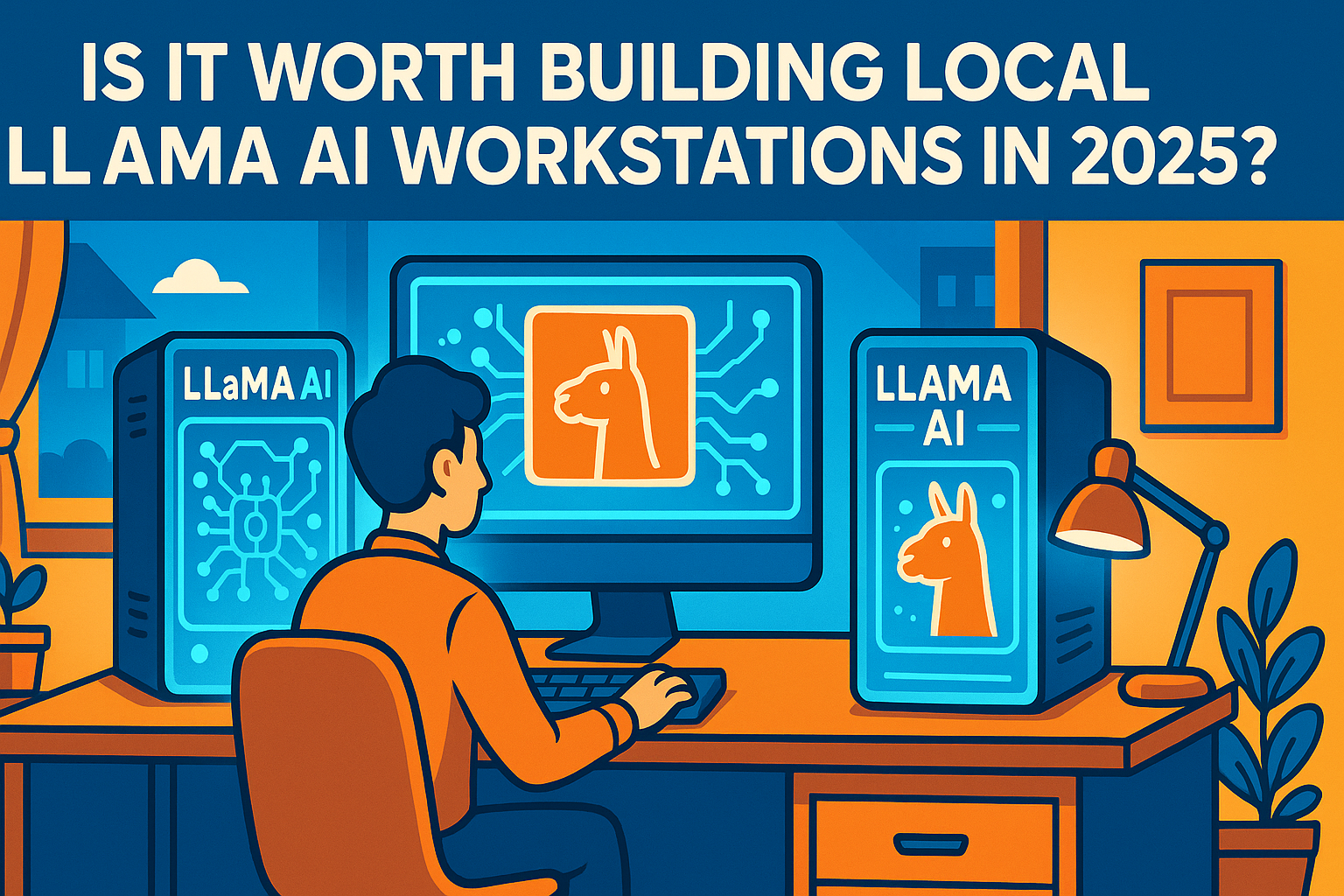
As AI models like Meta’s LLaMA 3 and other cutting-edge local large language models (LLMs) become more accessible, many professionals and enthusiasts ask: Is it worth investing in a local AI workstation for home or office use in 2025? The answer today is more nuanced and compelling than ever.
Running large AI models locally gives you full control over your data, predictable costs, and reduced latency[1][2][4]. Unlike cloud services where you pay per token or hourly usage, local deployment avoids hidden fees, fluctuating bills, or slowdowns due to network issues. Especially for sensitive applications—like legal, healthcare, or engineering projects—keeping data on-premises preserves privacy and ensures compliance with strict security standards[3][4].
Local AI setups also enable offline use, custom fine-tuning, and advanced experimentation without vendor lock-in. The growing availability of efficient GPUs with 24GB+ VRAM (e.g., NVIDIA RTX 4090, AMD RX 7900 XTX, or Intel Arc Pro B50) makes running models like LLaMA 3.1 (7B to 70B parameters) increasingly feasible[1][5].
Cloud AI platforms—such as AWS, Azure, Google Cloud, and specialized providers like OpenRouter.ai—offer convenient access to model inference, often with pay-as-you-go pricing[1]. OpenRouter.ai and others promote “all you can eat” subscription-style AI access, appealing for burst workloads or rapid prototyping.
However, these cloud services can become costly for heavy or sustained usage, with pricing that sometimes escalates beyond initial expectations[1][7]. Users face data privacy concerns, API rate limits, and dependency on stable internet connections.
Conversely, local hardware offers a flat, upfront investment and no ongoing per-use fees, functioning like an “all-you-can-eat buffet” that you own. Once your LLaMA AI workstation is set up, you can run unlimited inference and training tasks without surprise charges, while also safeguarding data[1][7].
{{< urlembed "https://www.llamabuilds.ai/" >}}
The trend is clear: local AI adoption is growing rapidly, not only among hobbyists but also small businesses and offices adopting edge AI for privacy and responsiveness[3][4]. Here are some key developments shaping the near future:
More efficient, affordable hardware: GPUs like Intel’s Arc Pro B50 (with 16GB VRAM at $349) and upcoming NVIDIA and AMD cards continue to lower the entry barrier for local LLM workloads[5][8]. This trend accelerates in 2026 with even better hardware and PCIe Gen 5 standardization.
Software frameworks maturing: Tools like Ollama, llama.cpp, LocalAI, and Clarifai make it easier to deploy, manage, and optimize LLaMA models locally. They increasingly support privacy-preserving workflows and seamless switching between local and cloud resources[2][4][7].
Hybrid cloud-local workflows: Many enterprises adopt hybrid settings where routine inference runs locally for cost and speed, while large-scale training or spike workloads leverage cloud GPUs dynamically[7].
Model innovations: New quantization techniques and model architectures reduce VRAM requirements while improving speed, making previously expensive setups viable on modest home or office machines[1][5].
Yes, if you:
Consider cloud if you:
High-Speed Storage Is Vital: Most guides emphasize NVMe Gen 4 SSDs, recommending at least a 2TB boot drive and 4-8TB NVMe drives for datasets and models. RAID 0 or 5 arrays of these drives are preferred for the I/O-intensive workloads LLMs demand.
Robust CPUs with Many Cores Are Recommended: Workstation-class CPUs with 16-64+ cores are favored, often paired with large ECC RAM (64-128GB+) for smooth multitasking and handling multiple concurrent AI processes.
GPU Selection Is Critical:
Cooling and Power: Efficient liquid cooling (280/360mm AIOs) and high-wattage 1200-1600W PSUs with Platinum/Titanium ratings are necessary to keep these power-hungry rigs stable and quiet.
Form Factor Choices: There's growing interest in compact and small form factor (SFF) workstations that can fit powerful GPUs while maintaining decent airflow, for use in home or office environments with limited space[8].
Software and OS: Ubuntu (20.04/22.04 LTS) is the most common OS, with extensive support for AI frameworks and remote management via SSH. Popular AI libraries and inference frameworks (e.g., PyTorch, Hugging Face Transformers, llama.cpp) are pre-installed or easily added.
Community & Benchmark Resources: Dedicated websites like llamabuilds.ai offer curated PC builds for LLaMA and AI workflows with benchmarks, price-performance data, and upgrade paths.
Budget vs. High-End Builds:
{{< embed "https://www.youtube.com/watch?v=ayWcs5FbxGY" >}}
{{< embed "https://www.youtube.com/watch?v=j1Gfu_uURa8" >}}
Local LLaMA AI workstations in 2025 strike an excellent balance between power, privacy, and cost efficiency. With new affordable GPUs, mature software stacks, and clear cost advantages over the cloud for steady workloads, building your own AI rig makes sense for many home users and offices.
Cloud platforms like OpenRouter.ai provide convenient “all-you-can-eat” alternatives but often at a premium and with privacy trade-offs. The best approach going into 2026 is a hybrid mindset—leveraging the strengths of both local and cloud AI according to your needs.