 x/health ·
Published: August 1, 2026 | Reading Time: ~7 minutes | Topic: Nutrition, Gut Health, Longevity
Let me ask you something: when was the last time your dinner plate looked like a box of crayons exploded on it — in the best possible way?
If your answer is "uh… never?" or "maybe once at a wedding buffet," you're in very good company. According to national nutrition data, eight out of ten American adults fall short in every single color category of phytonutrients.¹ That's not a typo — 80% of us are walking around with what researchers politely call a "phytonutrient gap," and our bodies are quietly paying the price.
But here's the good news: fixing this doesn't require a juice cleanse, a $200 supplement, or a degree in biochemistry. It's as simple — and as joyful — as eating more colorful, real, plant-based food. Let me show you why the humble polyphenol (stick with me, the name gets better) might be the most underrated health hero of 2026.
Polyphenols sound like something you'd need a lab coat to pronounce, but they're actually just natural chemical compounds that plants make to protect themselves — from UV radiation, pests, diseases, and the general stress of being a plant.²
Think of them as a plant's built-in armor and sunscreen.

When we eat those plants, those same protective compounds go to work in our bodies. As Cleveland Clinic registered dietitian Devon Peart explains, "Polyphenols are simply a category of phytonutrients, which are chemical compounds in plants that provide specific health benefits."²
There are more than 1,000 different polyphenols, but they all share two superpowers: they're antioxidants (they fight free radicals — unstable molecules that damage your cells over time) and anti-inflammatories (they help keep your body's repair system from going into overdrive when it doesn't need to).²
Oxidative stress and chronic inflammation? Those are the quiet troublemakers behind heart disease, autoimmune conditions, cognitive decline, and even how fast your skin ages.² Polyphenols help put out those fires — gently, continuously, and deliciously.
Your 3-Step Polyphenol Starter Pack:
If you've scrolled TikTok in 2026, you've probably seen the "3-color rule" — the challenge to include at least three naturally colorful plant foods in every meal. And unlike most viral food trends, this one has actual credentialed dietitians saying "yes, please."³
Michelle Routhenstein, a preventive cardiology dietitian, told Healthline: "I like the '3 color rule' trend because it's simple and encourages people to add more variety to their meals instead of focusing on counting calories or tracking macros."³

Here's what each color group brings to the table — literally:
| Color | Star Compound | Found In | Big Benefit |
|---|---|---|---|
| 🔴 Red | Lycopene | Tomatoes, watermelon, red peppers | Heart health, prostate protection |
| 🟠 Orange/Yellow | Beta-carotene | Carrots, sweet potatoes, mangoes | Eye health, immune function |
| 🟢 Green | Sulforaphane, chlorophyll | Broccoli, kale, spinach | Cancer-protective compounds |
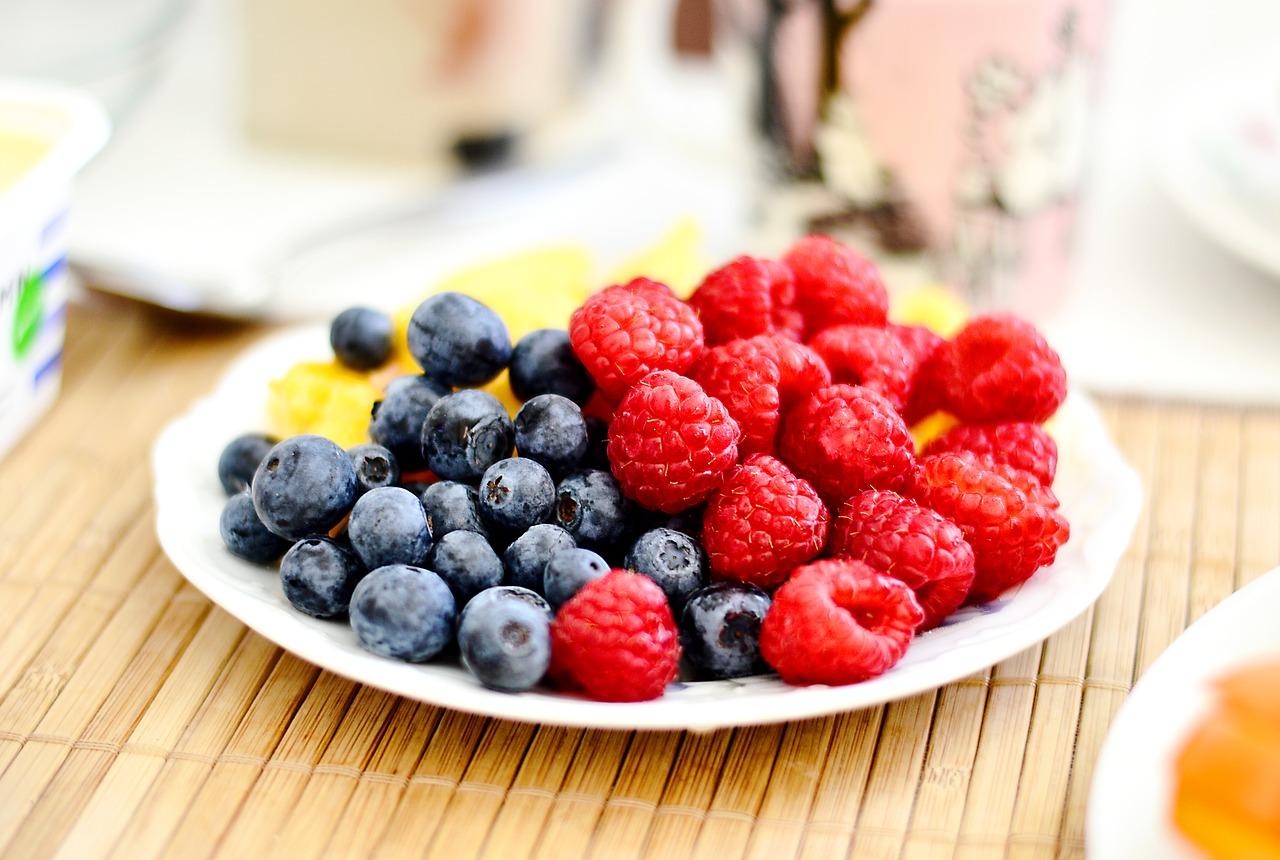
| 🔵 Blue/Purple | Anthocyanins | Blueberries, eggplant, purple cabbage | Brain health, cardiovascular protection |
| ⚪ White/Tan | Allicin, quercetin | Garlic, onions, mushrooms | Immune support, blood pressure |
Each color category represents a different class of bioactive compounds with distinct cellular effects.⁴ And here's the kicker: a 2025 systematic review in Frontiers in Nutrition concluded that anthocyanins — those deep blue, purple, and red pigments — can "extend lifespan and help prevent or alleviate various age-related diseases, including neurodegenerative diseases, cardiovascular disorders, metabolic syndrome, bone diseases, and cancer."⁴
That's not "eat blueberries and live forever." But it IS "the color on your plate is doing measurable biological work inside your body."
Your Rainbow Checklist for This Week:
Here's where things get really cool.
The American Gut Project — one of the largest citizen-science microbiome studies ever conducted — analyzed stool samples and dietary surveys from thousands of participants. Their headline finding? People who ate 30 or more different types of plants per week had significantly more diverse gut microbiomes than people who ate fewer than 10.⁵

Not only that — the diversity of plants mattered more than whether someone identified as vegan, vegetarian, or omnivore.⁵ It's not about cutting out food groups. It's about inviting more plants to the table.
Why does gut diversity matter? A diverse microbiome produces more short-chain fatty acids (SCFAs) — compounds that reduce inflammation, strengthen your gut barrier, and communicate with your brain via the gut-brain axis.⁵ Specific beneficial bacteria like Faecalibacterium prausnitzii thrive when you feed them a wide range of plant fibers and polyphenols.⁵
And Harvard Health backs this up: the landmark PREDICT 1 study, published in Nature Medicine, studied over 1,100 individuals and found that "eating more unprocessed plant foods — fruits, vegetables, nuts, seeds, and whole grains — allows the gut microbiome to thrive" and that "less healthy dietary patterns supported gut species associated with higher risk of cardiac events, strokes, and type 2 diabetes."⁶
Meanwhile, polyphenols act as prebiotics — meaning they selectively feed the good bacteria while making life harder for the pathogenic ones.⁷ One review put it plainly: "the number of beneficial bacteria increases while the number of pathogenic bacteria decreases."⁷
One important caveat: skip the polyphenol supplements. Cleveland Clinic is clear on this: "When you isolate nutrients from foods and manufacture them into supplements, some aspects of the whole food may get lost in translation."² The magic is in the whole package — fiber + polyphenols + vitamins + minerals working together in a symphony that a pill simply can't replicate.
Your 4-Step Gut-Feeding Play:
Minich DM, Journal of Nutrition and Metabolism — "A Review of the Science of Colorful, Plant-Based Food and Practical Strategies for 'Eating the Rainbow.'" NHANES data showing 8/10 Americans fall short in every phytonutrient color category. https://pmc.ncbi.nlm.nih.gov/articles/PMC7770496/
Cleveland Clinic — "Foods Rich in Polyphenols — and Why They're Important." Interview with Devon Peart, RD, MHSc. August 2023. Covers types, benefits, food sources, and why supplements fall short. https://health.clevelandclinic.org/polyphenols
Medical Daily / Healthline — "Dietitians Say the TikTok 'Eat the Rainbow' Trend Is Actually Sound Advice." July 16, 2026. Commentary from Michelle Routhenstein, preventive cardiology dietitian, and Kristin Kirkpatrick, RD. https://www.medicaldaily.com/eat-rainbow-tiktok-trend-dietitians-phytonutrients-2026-476286
Ma X, Jin Z, Rao Z, Zheng L. Frontiers in Nutrition — "Health Benefits of Anthocyanins Against Age-Related Diseases." June 2025. Systematic review of anthocyanins in lifespan extension, cardiovascular disease, neurodegeneration, and cancer prevention. https://www.frontiersin.org/journals/nutrition/articles/10.3389/fnut.2025.1618072/full
The Microsetta Initiative / American Gut Project (UC San Diego) — "30 Plants Per Week: Why Eating More Fruits and Vegetables Matters for Your Gut Microbiome." Study showing plant diversity correlates with gut microbial diversity and beneficial SCFA-producing bacteria. https://microsetta.ucsd.edu/30-plants-per-week/
Harvard Health Publishing — "Diet, Disease, and the Microbiome." April 2021. Coverage of the PREDICT 1 study (Nature Medicine) linking dietary patterns to microbiome composition and chronic disease risk. https://www.health.harvard.edu/blog/diet-disease-and-the-microbiome-202104212438
PMC / National Library of Medicine — "Polyphenols–Gut Microbiota Interrelationship: A Transition to a New Generation of Prebiotics." Review showing polyphenols modulate gut microbiota by increasing beneficial bacteria and decreasing pathogenic bacteria. https://pmc.ncbi.nlm.nih.gov/articles/PMC8747136/
All claims fact-checked against Gold-tier (NIH/PubMed, Nature Medicine, Frontiers in Nutrition) and Silver-tier (Cleveland Clinic, Harvard Health Publishing) authoritative sources. Last verified: August 1, 2026.
Here's to plates that look like art galleries, guts that hum with microbial joy, and health that tastes like actual food — not a chalky supplement pill. 🌈🥗🫐🧄