NX
NXplace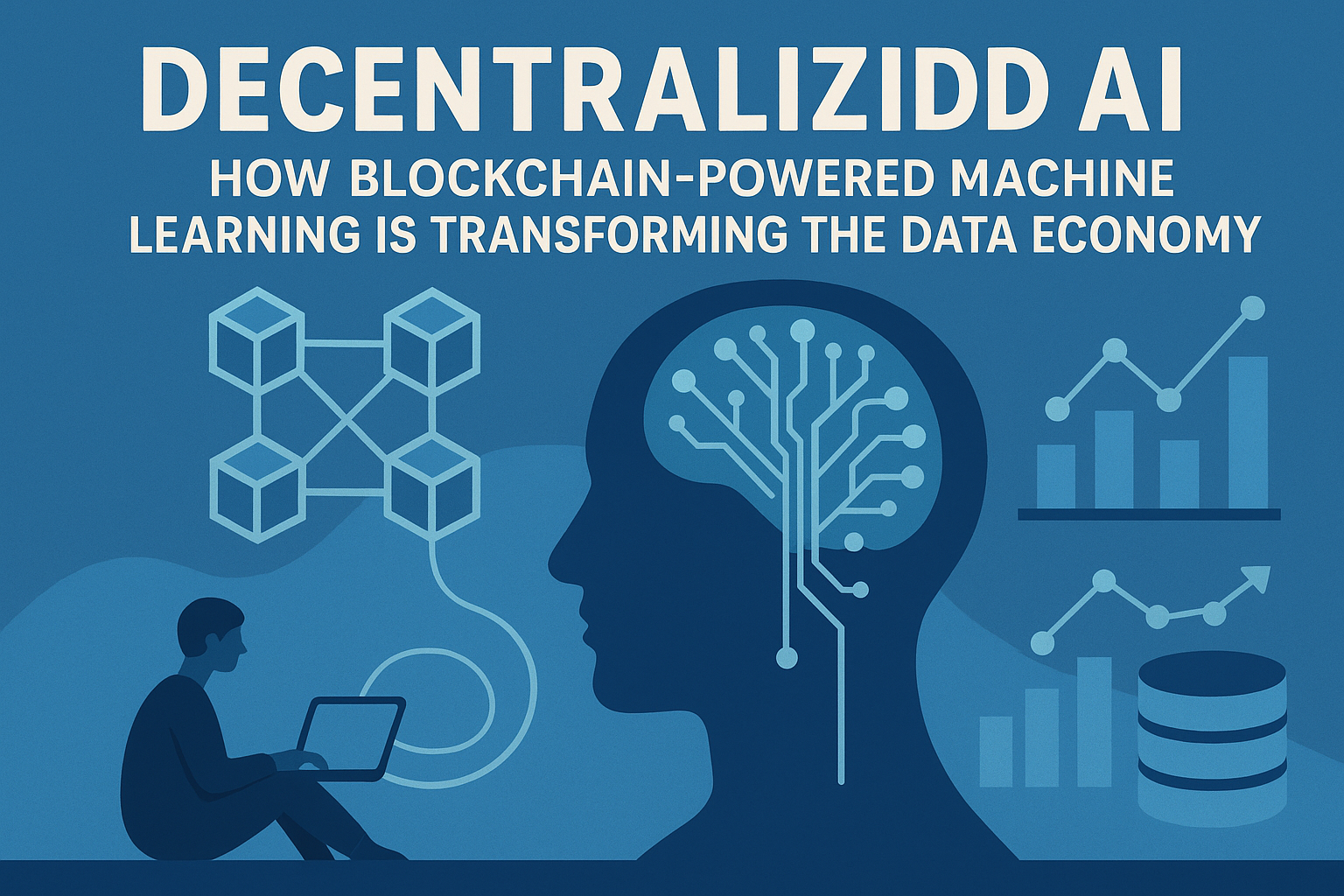
In the last decade, artificial intelligence and blockchain have been at the heart of disruptive innovation. Individually, they’ve revolutionized industries—from finance to healthcare and social networks. Yet, the intersection of these two technologies—Decentralized AI (dAI)—is an emerging frontier that’s garnering enthusiasm among tech leaders and entrepreneurs alike.
This fresh paradigm enables AI algorithms to train, operate, and transact on decentralized platforms, often using blockchain or distributed ledger technologies. The result? A shift in power and opportunity toward individuals and small organizations, while unlocking value from untapped data reserves. In this post, we’ll explore what’s driving decentralized AI’s emergence, highlight its new business models, and discuss real-world applications just beginning to surface in 2024.
Before the rise of decentralized AI, most machine learning models relied on centralized data silos and server farms, typically controlled by Big Tech. This model has powered enormous progress, yet it faces several hurdles:
These pain points have fueled the search for more equitable, transparent, and secure ways to power AI systems—leading us to decentralized AI.
Decentralized AI refers to systems where model training, inference, and data exchange happen across distributed networks, rather than via a single, central authority. Typically, this is achieved with:
The core idea: Everyone—from individuals to small companies—can participate in and benefit from a global, trust-minimized AI ecosystem.
A key innovation driving excitement in decentralized AI is the rise of decentralized data marketplaces. These platforms, such as Ocean Protocol, Fetch.ai, and most recently, projects like Aethir and Bittensor, allow:
What’s new in 2024: Projects are shifting beyond just data sales. Now, they’re enabling “Compute-to-Data,” where algorithms are sent to the data (rather than the other way around), preserving privacy even further, while smart contracts automate pricing and usage.
Let’s explore a few decentralized AI applications just now becoming viable:
Hospitals have long struggled to share medical data for research without violating patient privacy. New federated learning platforms, powered by blockchain for immutable audit trails and smart contracts for policy enforcement, enable hospitals worldwide to cooperatively train AI diagnostic models. Nobody’s raw data leaves the hospital premises, ensuring compliance with HIPAA, GDPR, and more.
Example: The Federated Learning Consortium, launched in late 2023, now includes over 50 hospitals in Asia and Europe exchanging diagnostic insights via a permissioned blockchain, resulting in a 25% improvement in rare disease detection.
Synthetic datasets are crucial for training and testing robust models, especially where data scarcity or privacy concerns exist (e.g., autonomous vehicles, finance). Decentralized AI networks are now incentivizing users to generate, validate, and monetize high-quality synthetic data, with reputation algorithms on-chain ensuring integrity.
Example: Network protocols like SynFutures (debuted Q1 2024) reward participants with tokens for uploading or verifying synthetic images and time-series data, enabling rapid expansion of training sets for edge-AI devices.
Instead of relying on a handful of cloud providers, individuals and small teams can collaboratively train, buy, and sell AI models in open marketplaces. Model performance (accuracy, robustness) and provenance is tracked on-chain, and buyers can select models meeting specific governance or compliance requirements.
Example: Bittensor’s neuron network allows contributors to stake tokens behind their open-source ML models and receive micropayments each time their code is used in inference tasks.
Despite its promise, decentralized AI faces real headwinds:
Nonetheless, these are active areas of exploration among researchers, entrepreneurs, and regulators. The pace of innovation is high—and with each technical leap, the barriers to global, participatory AI shrink.
Decentralized AI stands poised to disrupt not only how we train and deploy algorithms, but who benefits from their exponential growth. By breaking down data and compute monopolies, smart contracts and cryptoeconomic incentives may unlock vast creativity and reward individuals who previously had little stake in the digital economy.
Key trends to watch in 2024 and beyond:
The era of Decentralized AI is just beginning. If successful, it could foster not just smarter machines—but fairer, more resilient digital societies.
Are you exploring decentralized AI in your business or research? What potential or pitfalls do you see? Share your thoughts in the comments below!