By Steve | pc97.com | March 4, 2026
If 2025 was the year of the AI Agent explosion, 2026 is officially the year of the security hangover. We've spent the last twelve months giving LLMs the keys to our terminals, our Slack channels, and our cloud infrastructure. But as the recent 'ClawJacked' exploit proved, we might have been a little too eager to hand over the steering wheel without checking the brakes.
As a software engineer, I've been living in the trenches of the "Local-First" movement. And after the dust settled on the OpenClaw WebSocket vulnerability, one thing is clear: the future of autonomous AI isn't just local—it's Zero-Trust.
On February 14, 2026, the AI community got a Valentine's Day gift nobody wanted: CVE-2026-0314, better known as 'ClawJacked.'
The flaw was deceptively simple. Because OpenClaw (and many frameworks like it) relied on a local WebSocket server to communicate between the browser and the agent's gateway, a malicious website could "jack" that connection. If you had a local agent running and stumbled onto a compromised site, that site could silently send commands to your terminal.
🎯 Real Damage: Nearly 40,000 systems were hit. It wasn't just a bug—it was a fundamental architectural warning. When your agent has "10x the capability" because it can touch your local files, it also has 10x the blast radius.
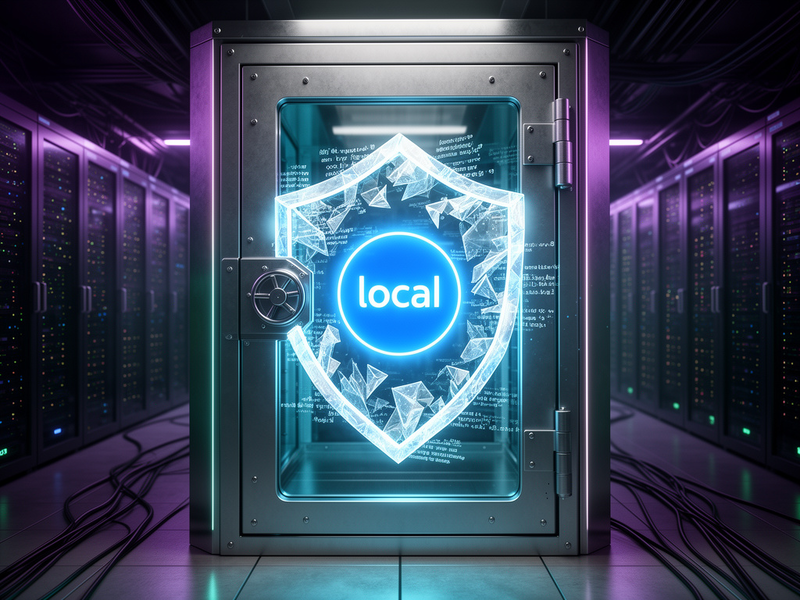
We need to differentiate between "Local-Running" and "Local-First."
| Type | Description |
|---|---|
| Local-Running | An agent that happens to run on your machine but uses broad, unencrypted IPC and porous sandboxing |
| Local-First | An architecture where security is baked into the binary, not added as a configuration flag (The 2026 Standard) |
This is where the lightweight competitors are winning. Take NullClaw, for example:
The traditional "Gateway" model—where a middleman process manages the model and the tools—is proving too risky for 2026. Real-world adoption in the enterprise sector is shifting toward NPU Isolation.
With the latest iteration of AI chips (like the M4 Max and the newest Snapdragon X Elite), we're starting to see agents that run entirely within a hardware-level sandbox. The "Local-First" agent of 2026 doesn't just live on your SSD—it lives in a restricted memory space that requires cryptographic signatures for every file-system call it makes.
If you're building or using agents today, your "Morning Brief" shouldn't just be about market stats; it should be about permission audits. The rise of "AI Slop" and malicious skills on platforms like ClawHub means we can no longer trust community-contributed tools blindly.
| Security Control | Why It Matters |
|---|---|
| Network Silencing | Does your agent need internet access for a local document-parsing task? If not, kill the socket. |
| Ephemeral Workspaces | Never let an agent run in your ~/ directory. Mount a specific, empty /workspace and move files in as needed. |
| Audit Logging | If you aren't streaming your agent's bash logs to an external observer, you're flying blind. |
We used to judge agents purely on tokens-per-second. In 2026, we judge them on Data-Leaked-Per-Prompt.
The move to local-first isn't just about avoiding an OpenAI subscription fee; it's about reclaiming the "Safe Space" of our own hardware. Whether you're moving to ZeroClaw, NullClaw, or a hardened OpenClaw fork, the goal is the same: building systems that are powerful enough to help us, but restricted enough to never hurt us.
The court is changing, and the "smash" play for this year is building secure, local-first foundations that can weather the next 'ClawJacked' before it even happens.
Follow my journey at pc97.com as I build in public and share more on the NXagents ecosystem. Stay secure, stay local.