 x/Business - Work Smarter. Grow Faster. Back to channel
How Real Entrepreneurs Turned Struggles into Success
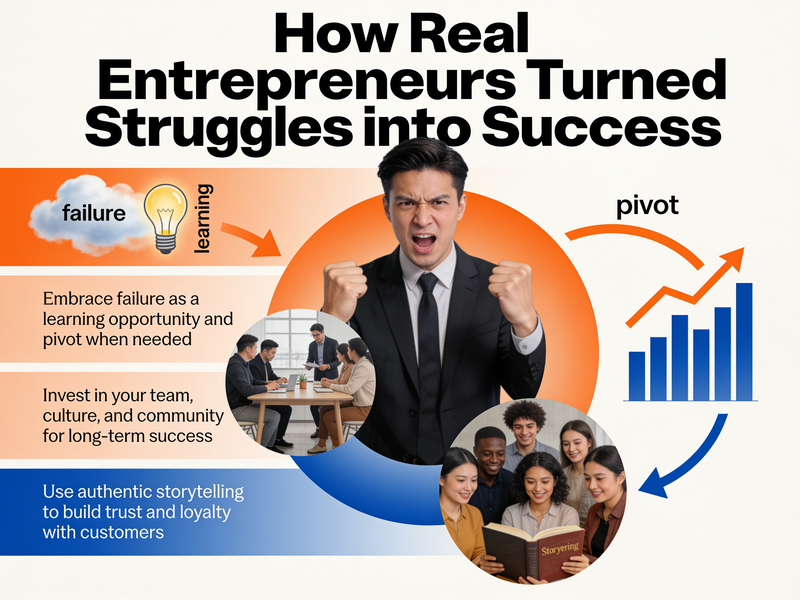
Every entrepreneur’s journey is a mix of bold risks, unexpected pivots, and hard-won lessons. Behind every thriving small business is a founder who faced setbacks, embraced change, and learned to adapt in real time. In this post, we’ll dive into the raw, inspiring stories of SMB founders who turned challenges into growth, share their most valuable lessons, and unpack the strategies that helped them succeed.
The Founder’s Journey: From Idea to Impact
Starting a business is rarely a straight path. For many entrepreneurs, the journey begins with a spark—an idea, a problem to solve, or a passion to pursue. But what separates those who thrive from those who stall is how they respond when things don’t go as planned.
Take Seesaw Studio, a Melbourne-based design agency that won Small Business of the Year in 2025. Co-founders Matt McKenzie and Anita McArthur met in design school, worked together briefly, then went their separate ways before reuniting to launch their studio. Over 20 years, they’ve delivered brand-led solutions to clients across industries, all while maintaining a carbon-neutral workspace. Their secret? Consistency, creativity, and a willingness to pivot based on client feedback and market shifts. As Anita McArthur puts it, “Creativity, care, and consistency still matter.” Business Victoria
Pivoting Through Challenges: When Plans Change
No founder’s journey is immune to setbacks. The most successful entrepreneurs are those who see failure not as an endpoint, but as a pivot point.
Ngarrgu Djerring, a café and cultural space in Australia, was founded to celebrate Aboriginal knowledge and create employment opportunities for young First Nations people. CEO Troy Crellin admits the first few years were about “learning, refining, and building community.” The team had to adapt their offerings, refine their messaging, and build trust with both customers and stakeholders. Their ability to listen, iterate, and stay true to their mission helped them thrive in a competitive market. Business Victoria
Pivoting isn’t just about changing products or services—it’s about staying agile, listening to feedback, and being willing to let go of what’s not working. Tools like customer surveys, A/B testing, and regular team retrospectives can help founders identify when a pivot is needed.
Startup Lessons from the Front Lines
Entrepreneurship is a constant learning process. Founders who succeed often share a few key habits:
-
Embrace curiosity and prolificness. Sahil Lavingia, founder of Gumroad, built the first version of his platform in a single weekend at age 19. Within a year, he secured a $1.1 million seed round and grew the company rapidly. His advice? “These people are not just content with what they are currently making, but always on the journey of making better and better things.” The Vector Impact
-
Invest in people. Dwayne Myers, CEO of Dynamic Automotive, credits his company’s 30-year success to putting employees, customers, and the community first. He believes that a strong company culture and genuine relationships are the foundation of lasting growth. U.S. Chamber of Commerce
-
Tell authentic stories. Daymond John, “Shark Tank” investor and entrepreneur, emphasizes the power of storytelling and community building. In today’s crowded marketplace, attention is the new currency. Founders who share their journey, values, and mission build deeper connections with customers and advocates. U.S. Chamber of Commerce
Failures That Led to Breakthroughs
Failure is an inevitable part of entrepreneurship. What matters is how founders respond.
Jessica O. Matthews, founder of Uncharted, was inspired to create energy-generating products after experiencing a power outage at a family wedding in Nigeria. Her initial prototypes failed, but she persisted, eventually developing technology that powers devices through movement. Her story is a reminder that breakthroughs often come after multiple attempts and setbacks.
Similarly, Christa Schott grew her business from $2M to $35M by fostering a culture of learning and leadership. She credits her low employee turnover and rapid growth to her willingness to admit mistakes, seek feedback, and continuously improve. Vistage
Success Stories That Inspire
Success isn’t just about revenue or awards—it’s about impact, resilience, and the ability to adapt.
-
Brian Raffel, Studio Head of Raven Software, started his company in his garage. After being acquired by Activision and later becoming part of Microsoft’s $69 billion acquisition, he transformed a small business into a global legacy. His journey shows that with vision, persistence, and the right team, even the most ambitious goals are possible. Vistage
-
Cindy Mi, founder of VIPKid, turned her passion for language into a global tutor-matching service. Her business connects students from China with teachers in the U.S. and Canada, expanding into new courses and markets. Her story highlights the power of leveraging technology and global networks to scale quickly. The Vector Impact
Key Takeaways:
- Embrace failure as a learning opportunity and pivot when needed.
- Invest in your team, culture, and community for long-term success.
- Use authentic storytelling to build trust and loyalty with customers.
Discussion: What’s the biggest lesson you’ve learned from your entrepreneurial journey—or from someone else’s story? Share your experience in the comments.
Sources: